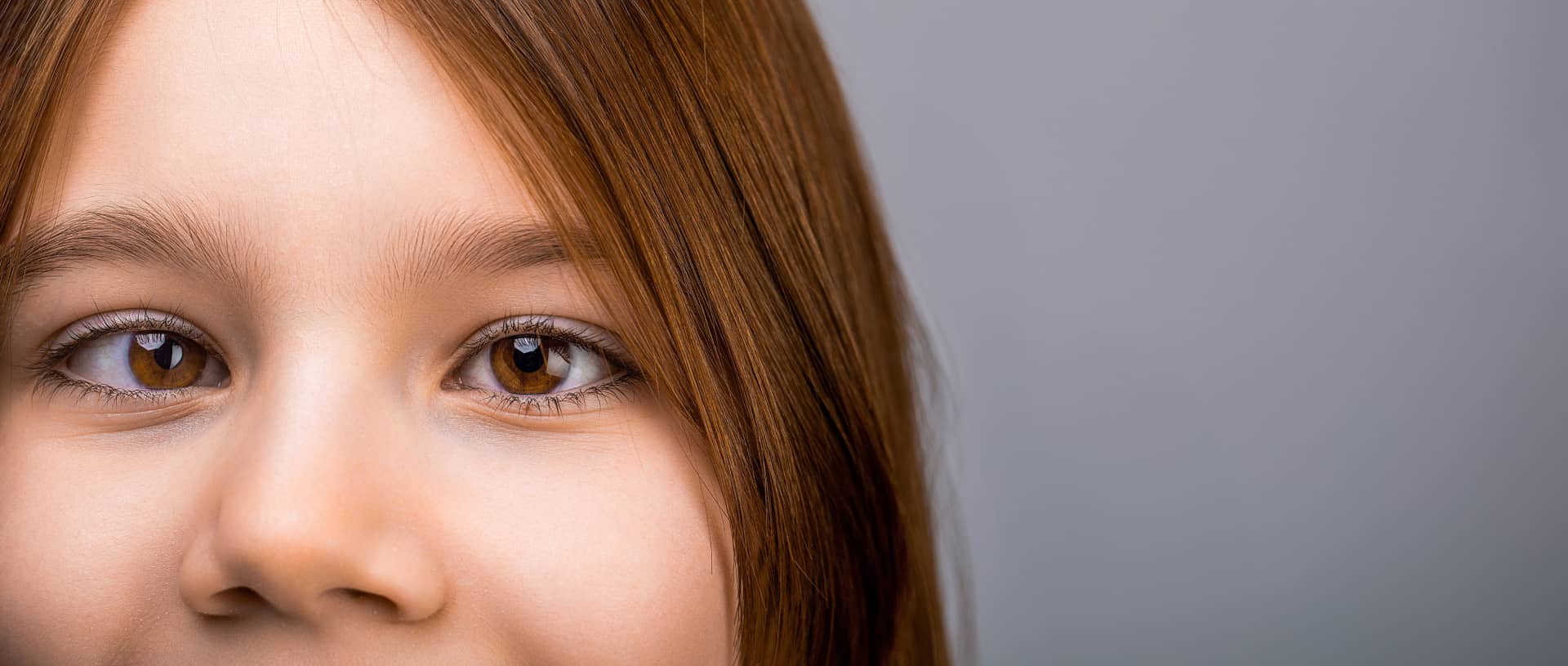
What is strabismus?
Strabismus is a vision disorder where the eyes are not aligned correctly and point in different directions: one eye stares at the target, the other looks elsewhere. It affects around 4% of children.
Can strabismus reduce my vision?
The condition can reduce vision, with different implications depending on the age of the patient. In young children, the brain can suppress the image in one of the eyes, risking amblyopia (lazy eye) if not treated by age 7 to 9.
How to spot a strabismus?
The eyes can deviate inward (esotropia/converge) or outward (exotropia/diverge). Manifestations range from brief daily occurrences to permanent positioning.
- Childhood strabismus is usually primary (not related to other health problems)
- It can be caused by refractive errors, be intermittent or permanent
- A strabismus that appears in adulthood is often secondary, following trauma, stroke, hypertension, diabetes or inflammatory diseases.
What are the risk factors for strabismus in children?
- Uncorrected hyperopia
- Family history
- Eye disorders
- Neurological conditions
- Muscle control problems
What are the risk factors for adult strabismus?
- Head trauma
- History of childhood strabismus
- Diabetes, hypertension
- Muscle diseases
- High myopia
Support
- Adapted optical correction (glasses)
- Occlusion of the dominant eye to treat amblyopia
- Orthoptic rehabilitation
- Oculomotor muscle surgery
A complete ophthalmological examination and an orthoptic assessment are indicated if strabismus is suspected.